
Social Media Video Strategy for B2B Software: Cutting Verified Walkthroughs Into Shorts That Still Prove Something
B2B social video stays sustainable when you cut shorts from videos you already made instead of recording for social. Where the cuts come from, which moments get attention, and what to stop making.
Part of our guide to Video Content Strategy for Software Companies.
Social video from B2B software companies tends to fail in one of two ways. Some of it borrows consumer tactics, like trends, hooks and a founder talking to camera about lessons learned. The rest is a product screenshot with a caption, posted because the calendar said Tuesday.
A third approach costs less than either and works better, and it depends on one rule.
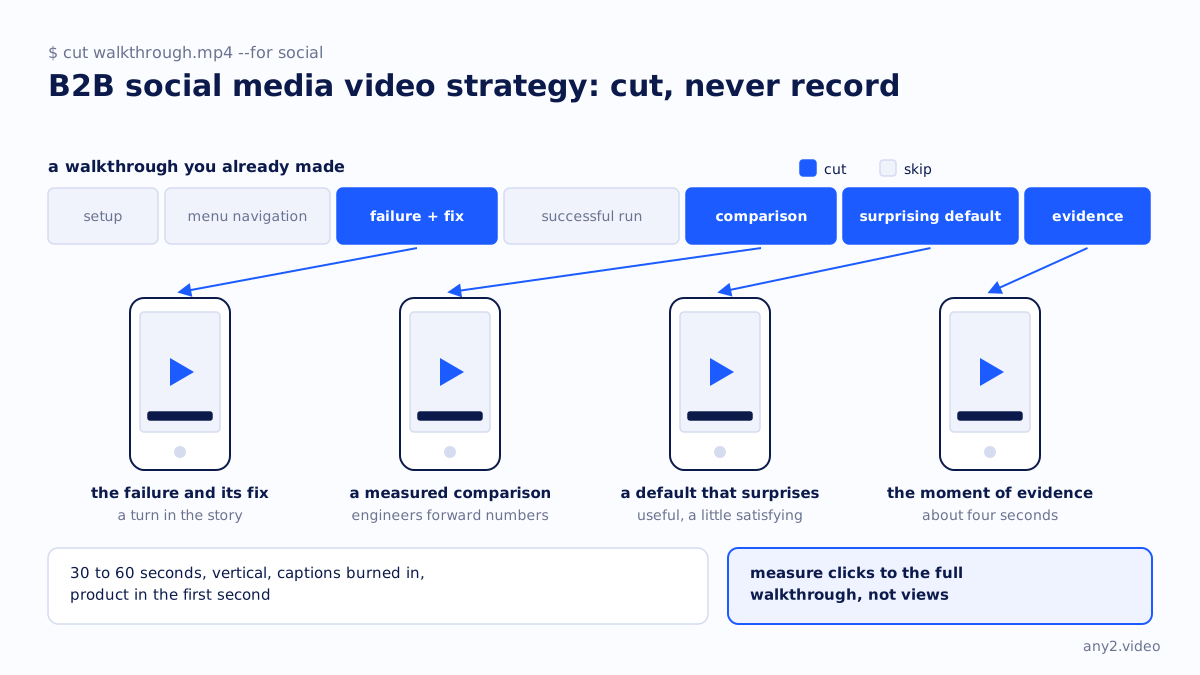
Never record for social
Every short you post should be cut from something you already made for a real purpose. Original shorts can be good, but a programme built on them stops as soon as the person making them gets busy, while one built on cuts keeps going.
When a short takes an afternoon to make, you will post four of them. When it takes fifteen minutes to cut, you will post forty.
The economics change a lot as a result. Your walkthrough library supplies the raw material, and social becomes a matter of distribution instead of production.
Which moments get attention
Most of a walkthrough is not worth cutting. Four kinds of moment reliably hold attention:
- The failure and its fix. Something breaks and then works. It is the only part of a technical video with a turn in the story, and it is also the most searched part of your documentation.
- A measured comparison, with the old version's number beside the new one. Engineers forward numbers.
- A default that surprises people, such as the toggle that was off, the undocumented setting or the screen everyone gets wrong. It is useful, and a little satisfying to watch.
- The moment of evidence, like two checksums matching, an alert arriving or a restored machine booting. It lasts about four seconds and carries the whole argument.
The setup, the menu navigation and a successful run with nothing at stake do not get attention.
Format
Cut vertical clips of thirty to sixty seconds, burn in captions because most people watch muted, and show the product in the first second. Skip the intro, the logo sting and any "in this video we will".
Each cut should make sense on its own. Someone who has never heard of you should be able to tell what broke and what fixed it without the four minutes around it.
How our own shorts measure up
The five thirty-second pieces on our channel are brand shorts rather than cuts from walkthroughs, and the library labels them that way, as designed pieces with no product run to verify. They argue a position instead of demonstrating a task.
That is a fair use of the format, and it is different from what this page recommends. A programme can have both, but when the two get mixed up, the library fills with opinion and runs short of proof.
Where to post, most useful first
- LinkedIn, from personal accounts rather than the company page. Test both: on most B2B platforms a personal account and a company page do not get the same reach, and yours is the only comparison that counts.
- YouTube Shorts, which feed the channel hosting the full walkthroughs, so each helps the other.
- Your own docs and release notes. They are not social media, but no other placement will put a thirty-second clip in front of people with more intent.
- X and Bluesky, if your audience is developers. Otherwise skip them.
- TikTok and Instagram are almost never worth it for B2B infrastructure software, and knowing that up front saves you a quarter.
A cadence that survives a busy month
Post two shorts a week, both cut from walkthroughs recorded that month for other reasons. In a month with no walkthroughs, post nothing. A gap does less harm than filler, since filler teaches your audience to scroll past you.
The one thing worth scheduling on purpose is a release, because the comparison cut practically makes itself when you ship. The process is in how to run a video marketing campaign around a product release.
What to measure
Ignore views. Count clicks through to the full walkthrough and replies that ask a real question. A short with forty thousand impressions and no clicks entertained people who will never buy anything.
Evaluation happens in the full-length videos, and social is there to send people to them. If the shorts are not doing that, they are failing, whatever the other numbers say.
No walkthroughs to cut from yet? Start with one. The first sample is free.
$ get-sample →