
How to Start Video Marketing at a Software Company: One Product, One Task, One Verified Video
Most video programmes stall while they are still being planned. The smallest useful start is one task, one afternoon and one number to measure, and the plan can wait until that number exists.
Part of our guide to Video Marketing for SaaS and Tech Companies.
Video programmes at software companies rarely fail in production. They fail earlier, when someone is asked to write a strategy that depends on decisions nobody has evidence for. Writing it takes six weeks, a new quarter starts, and the whole thing gets deferred.
Make the first video before you write the plan, because that video produces the evidence the plan needs.
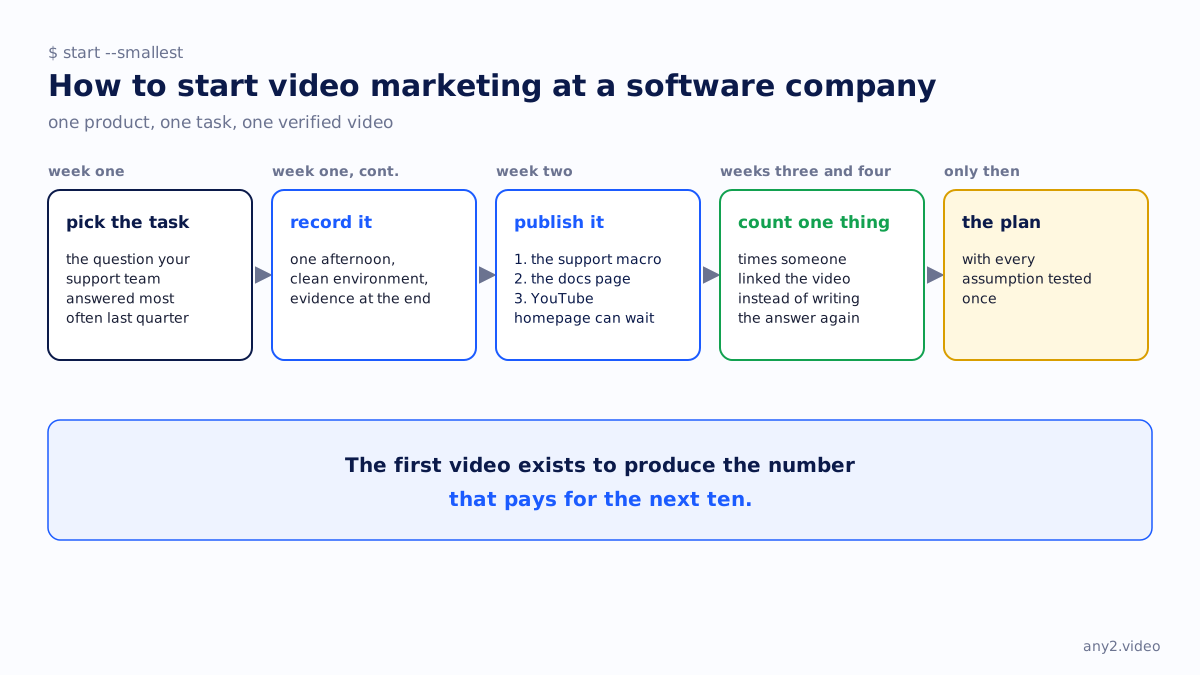
Week one: pick the task
Pick one task, and choose it by the method least open to argument.
Open your support queue, group last quarter's tickets by tag or search them, and find the question your team answered most often. That is measured demand, it costs nothing to find, and nobody in the room can dispute it. If you have no support queue yet, ask whoever gives demos which thing they explain on every call.
Write the task as a sentence with a finish line, such as "restore a single file from last night's backup". "The restore feature" is too vague to record.
Week one, continued: record it
Set aside an afternoon. Use a clean environment, state the prerequisites on screen, and start the screen recorder before you begin so it is still running when something fails. Do the task. At the end, show the evidence the product produced, which here means the restored file matching its original rather than a success message.
Keep a written log with timestamps as you work. It becomes the chapters, the written guide and the troubleshooting section, and rebuilding it from memory afterwards is painful.
The full process, including the parts people skip, is in how to make a marketing video for a software product.
Week two: publish it where the question gets asked
Leave the homepage out of it for now and put the video in three places, in this order:
- The support macro for that ticket, so the next person who asks gets a link instead of a paragraph.
- The documentation page for the task, embedded, with the written guide beside it.
- YouTube, where people who are not customers yet can find it.
The homepage mostly reaches people who were already interested, so it can wait.
Weeks three and four: count one thing
Count how many times someone linked the video instead of writing the answer out again.
You will have that number within a fortnight, it comes from a system you already run, and it converts straight into hours of your team's time. It makes a far better case for the next batch than a view count does, and it is the reason to start with a support question instead of a launch video.
The first video exists to produce the number that pays for the next ten.
Only then, the plan
Once one video is made and one number is measured, planning gets concrete. You know how long a recording takes at your company, on your product and in your environment. You know whether anyone will link it, and which step was harder than you expected.
At that point the inventory and scoring method in video content strategy for software companies takes an afternoon rather than six weeks, since every assumption in it has already been tested once.
Common ways this goes wrong
- Starting with the homepage video, which is the most expensive thing you could make first, the hardest to measure and the least reusable.
- Choosing the task by committee. The ticket count settles the argument.
- Deleting the failed take. People search for the failure, and cutting it turns the walkthrough back into a demo.
If the afternoon is what stands in the way, the first sample here is free. You get one product, one task and one finished video with its log and troubleshooting notes, so you can see what the result looks like before committing anyone's time.
Start with the free one. One product, one task, one sentence.
$ get-sample →