Video Marketing for SaaS and Tech Companies: A Practical Guide That Starts From the Product, Not the Campaign
Most video marketing advice was written for businesses that sell to consumers. Software differs in four specific ways, and each changes what you should make. A guide for teams whose product lives on a screen.
Nearly every guide to video marketing for business was written with a restaurant, a gym or a consumer brand in mind. For them the advice is sound: show the space, show the people, tell a story and post consistently. Applied to software, the same advice produces the office tour, the founder monologue and the abstract product film, and none of those answer anything a buyer asked.
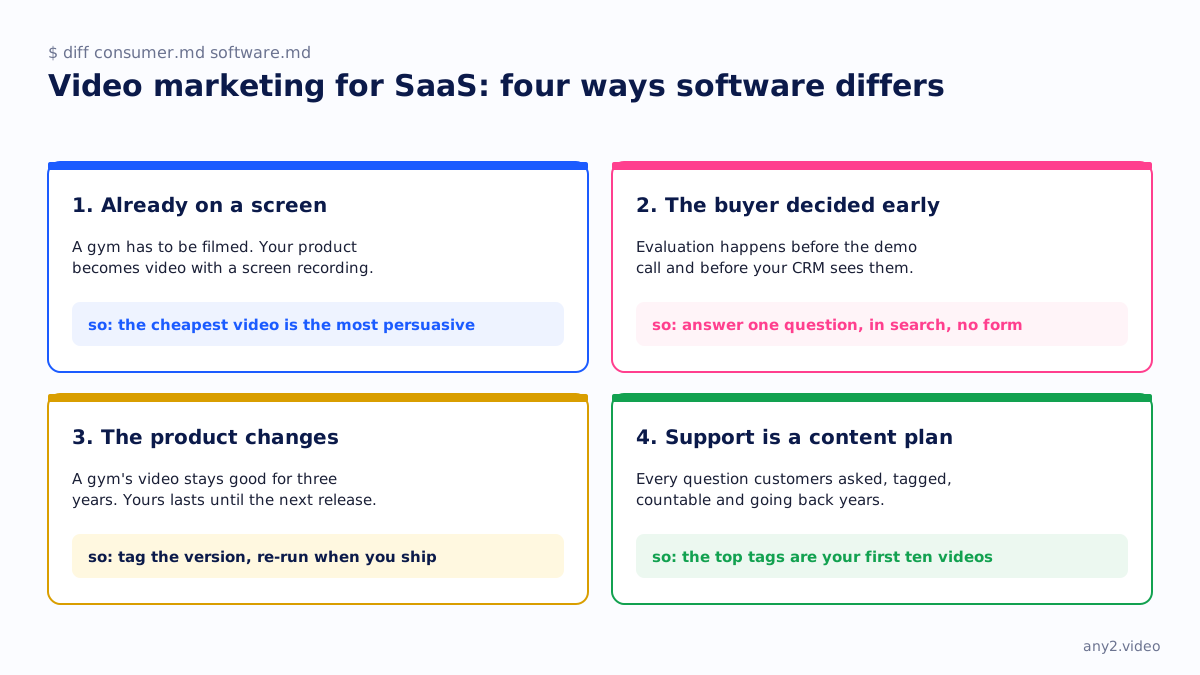
Software differs in four ways that change what you should produce.
1. Your product is already on a screen
A gym has to be filmed. Your product becomes video with a screen recording, with no production cost and no crew. That is a big structural advantage, and most software companies waste it, because the marketing team has no access to a clean environment and the people who do are busy.
In practice, the cheapest video you can make is also the most persuasive. A two-minute screen recording of the product doing a real job costs an afternoon, and it does better than a five-figure brand film on every question a buyer has.
2. Your buyer has mostly decided before talking to you
Evaluation happens before the demo call, before sales gets involved and before anyone shows up in your CRM. Someone with a problem searches, reads, watches and forms a view. By the time they book a demo, they are often confirming a decision they already made.
The videos that matter are the ones available at that stage. They answer a specific question, show up in search and sit in front of no form. If the one product video that would have convinced the buyer is behind a form, the form is where you lost them.
3. Your product changes underneath the video
A gym's video stays good for three years, while yours is good until the next release. A menu moves, a default changes or a screen is redesigned, and the video keeps playing with full confidence while showing the wrong thing.
Almost nobody accounts for this, which is why software video libraries slowly turn into a liability. The fix is a routine: tag every video with the version it ran against and re-run the affected ones when you ship. A video-first strategy for software products covers it.
4. Your support queue is a content plan
Consumer businesses have to guess what their audience wants. You have a log of every question customers have asked, tagged, countable and going back years.
Export it. The top tags are your first ten videos, ranked by measured demand. Each one has a return you can prove, which is how often support links to it instead of typing the answer again.
What to make, in order
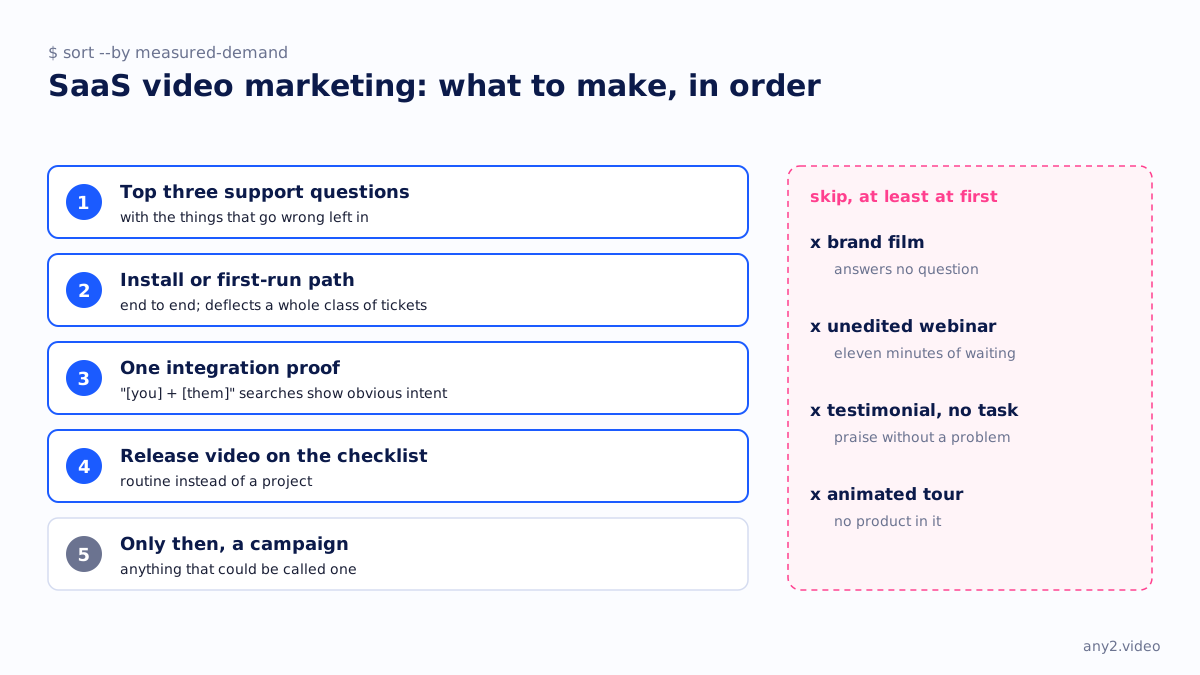
Because of those four differences, the order for a SaaS or tech company is fairly predictable.
- Start with the three questions your support team answers most, recorded with the things that go wrong left in.
- Next, record the install or first-run path end to end. It deflects a whole class of tickets, and people who have not bought anything yet find it.
- Then record one integration proof showing your product with the third-party platform sales gets asked about most. It has the highest search value on the list, because "[you] + [them]" searches show obvious intent and rarely find a good answer.
- Put a release video on the ship checklist so it becomes routine instead of a project.
- Only after those, make anything that could be called a campaign.
The full list of types, with what each one needs and the four to skip, is in the twelve types of marketing videos software companies actually need.
What to skip, at least at first
- The brand film, ninety seconds of abstract motion that answers no question. It occasionally makes sense at a rebrand, and rarely twice.
- The unedited webinar, where good content sits behind eleven minutes of waiting room. Cut into task walkthroughs, it becomes five useful videos.
- The testimonial that names no task. Praise without a specific problem says nothing about whether your product does the job.
- The animated tour with no product in it. It dates immediately, and viewers notice they never saw the software.
The number that pays for the next ten
Leave attribution for later. Start with a number that is easy to get and hard to dispute, which is how many times support linked the video in a month instead of writing the answer again.
That figure arrives within weeks, comes from a system you already run and converts directly into hours. It makes a much better case for the next batch than a view count, and it is why you should start with support questions instead of the launch video somebody asked for.
Where to start this week
Open the support queue and find the question answered most often this quarter. Write it as a task with a finish line, then record someone doing it in a clean environment, keeping the failures. Publish it with the written steps beside the video, and link it the next time that ticket comes in.
The recording process is in how to make a marketing video for a software product. If you would rather not spend the afternoons, the first sample is free.
More in this guide
One product, one task, one sentence. The first sample is free.
$ get-sample →