AI Video Marketing for Software Products: What an AI Operator Can Record That a Video Generator Cannot
Two very different things are sold as AI video. For a software product, the difference decides whether the result counts as evidence: a generator imagines your product, while an operator runs it.
Two separate markets now share the name AI video, and mixing them up is expensive for anyone who sells software.
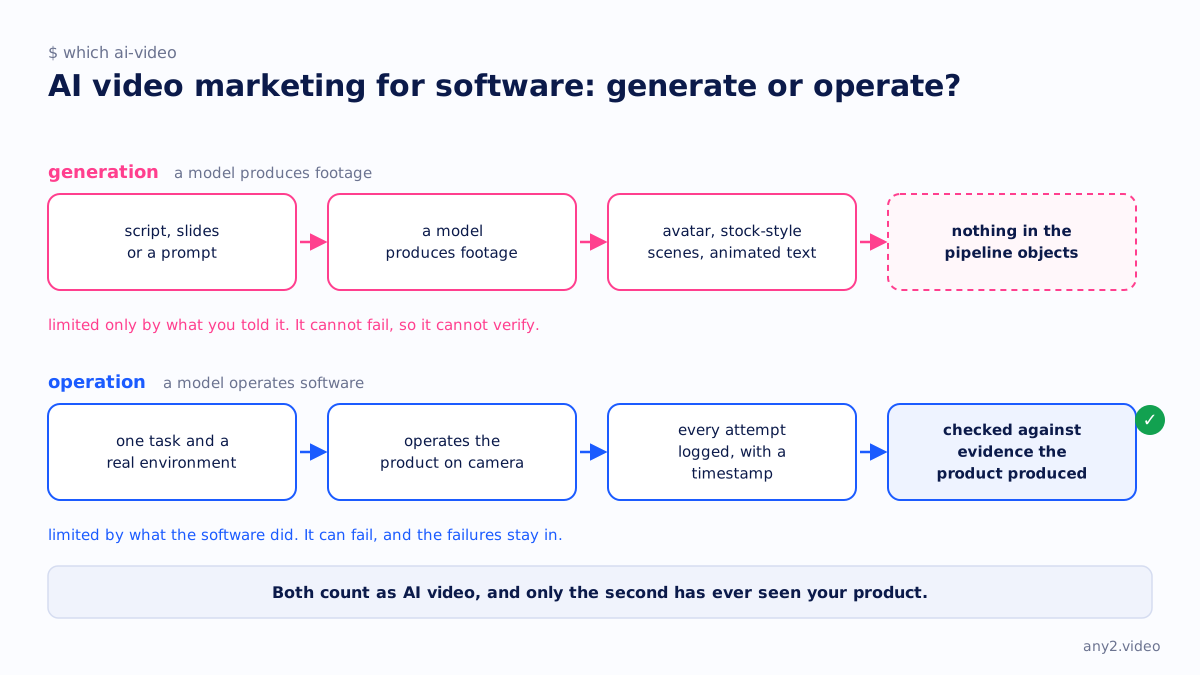
In the first, a model produces footage. You give it a script, some slides or a prompt, and it returns something that looks like a video, with stock-style scenes, an avatar presenter and animated text. This is generation.
In the second, a model operates software. It opens your product, clicks through a task, runs into whatever does not work and fixes it, and the screen is recorded the whole time. This is operation.
Both count as AI video, and only the second has ever seen your product.
What a generator can and cannot do
Generators are good, cheap and improving, and for some jobs they are the right tool. A generated explainer built on facts you verified is a perfectly good sixty seconds for a licensing model, an architecture or any concept that has no screen.
What a generator cannot do is be wrong in the way a recording can be wrong, and that is the problem with it.
A recording is limited by what the software did, and a generation is limited only by what you told it.
If the real menu in your product is three clicks deep and the generated footage shows two, nothing in the pipeline objects. If a setting was renamed in the last release, the generated video still shows the old name. Because it cannot fail, it cannot verify anything, and all it shows about the product is what you claimed, rendered attractively.
That is acceptable for a category video. For the evaluation question (can this product do the job I need?) it does harm, because the buyer cannot tell which kind of video they are watching. If they find out later, they start doubting everything else you published.
What an AI operator does instead
An operator gets one task and access to a real environment. It performs the task in the product on camera, and every attempt is logged with a timestamp. The result is then checked against evidence the product produced on its own: the file is in the bucket with a matching checksum, the alert arrived, or the machine boots.
The useful property is that it can fail, and it does. The first attempt gets a 403, a toggle defaults to off, a permission is missing. Those failures stay in, because your users will hit them and search for them, and a generator has no equivalent.
The whole method behind this site is set out step by step on how it works, and any entry in the library shows what the output looks like.
Where the economics change
AI is cheaper per video here, but the bigger change is that coverage becomes something you can plan.
A product with 200 useful tasks, five supported platforms and three languages has 3,000 possible combinations before the next release lands. No content team produces that by hand, so teams cover four tasks and leave 196 without a video. An operator that can run a task, record it and re-run it on release puts far more of those combinations within reach.
The arithmetic, and what to do about it, is in a video-first strategy for software products.
Questions to ask any AI video vendor
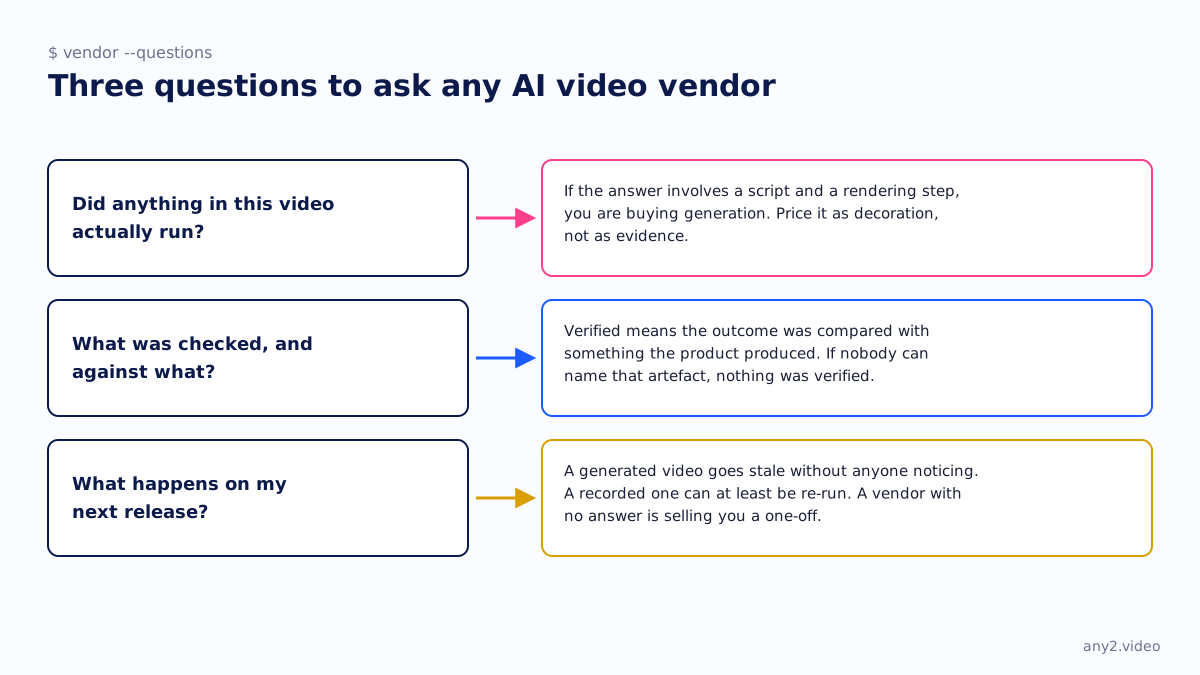
- Did anything in this video actually run? If the answer involves a script and a rendering step, you are buying generation. That may be the right purchase, but price it as decoration and not as evidence.
- What was checked, and against what? Verified means the outcome was compared with something the product produced. If nobody can name that artefact, nothing was verified.
- What happens on my next release? A generated video goes stale without anyone noticing. A recorded one can at least be re-run, and a vendor with no answer is selling you a one-off.
Disclosure
If an AI operated the product in a video you publish, say so in the description, every time. Viewers have a right to know how a video was made, and disclosure also works in your favour.
A company that says "an AI operator ran this, here is the log, and here are the two attempts that failed" is making a claim anyone can check. A company that generates footage and lets you assume it was recorded is making a claim nobody can check, and eventually someone will notice the difference.
Our policy is that the operator is AI, the verification and editorial judgements are made by people, and every video says so.
In short
Use generation for concepts, release summaries and anything without a screen. Use operation for anything a buyer might rely on to decide. Keep the second from being replaced by the first, since the two look identical on screen and only the recorded one shows what the product did.
More in this guide
- AI SOP Generators Compared
- iorad Alternatives
- Loom Alternatives
- Navattic Alternatives and Competitors
- Screen Studio Alternatives
- Tutorial Software Compared
- Vidyard Competitors
- AI Video Translation Tools for Technical Product Videos
- AI Video Generators for Product Marketing
- Best Screen Recording Software for Software Demos
- Interactive Demo Software Compared
- Scribe vs Tango vs Guidde
- Loom for Marketing
- Video Marketing Tools for Software Companies
- Video Marketing Software vs a Video Marketing Service
- Marketing Video Production for Software Companies
See what an operated run looks like on your own product. First sample is free.
$ get-sample →